Main

July 29, 2011

Mike Mayo's Exile on Wall Street


"Look, if you can't compete in the major leagues for over a decade, it's time to go back to the minors," said the always outspoken Mike Mayo, an analyst with CLSA. His chronicle of ruffling bank management feathers, "Exile on Wall Street" (Wiley), will be published in the fall.

JPMorgan Chase is as well managed as any gargantuan bank can be. But if you look at its businesses, it's hard to see any area where it is clearly the best, something even its own executives concede. Not in credit cards, where the premier name is American Express. Not in money management, where you might offer up T. Rowe Price. Investment banking -- Goldman Sachs (the last quarter notwithstanding). Back-office transactions, State Street.

Yet even JPMorgan is merely trading at book value. Put another way, the market regards the value that JPMorgan provides as a financial services conglomerate as zilch. How well do all of JPMorgan's divisions work together? In presentations to investors, JPMorgan executives show how much revenue they gain from existing clients. But these measures are hardly unbiased. Executives have an incentive to defend their empires. Who is to say that a certain division of JPMorgan wouldn't have won that business anyway? And nobody measures how much a bank loses through conflicts of interest.

Making a nuanced argument, John Hempton, a blogger, investor and former regulator in Australia, says that it's better for shareholders -- and societies -- to have large banks with lots of market power. That makes them more profitable and leads them to take less risk, making them safer and more enticing for investors.

April 16, 2011

Sites we are reading


Time to review the investing blogroll, 2010.

24/7 Wall St.

A Dash of Insight /Jeff Miller

Abnormal Returns
Barron's
Berkshire Hathaway Annual Letters
Bloomberg
Briefing.com
CNBC
Crossing Wall Street
DealBreaker
Drudge
Footnoted
HedgeFolios
Information Arbitrage
Jeff Saut
Muniwiseguy
ProQuest
Random Roger
Reuters
Sonders
Take A Report
The Big Picture

The Kirk Report / Charles E. Kirk / 12 steps to GTD

TheStreet.com
Trader Mike
TraderFeed
WallStCheatSheet
Wall Street Window
Wikinvest
World Beta

March 27, 2011

Do not wait to be right


In order to "become right," some investors will stand by their predictions despite a stock or the market going the opposite way, hoping to be proven correct. Ned Davis called this the curse of "being right rather than making money."There are only two kinds of predictions that have some value to investors: One is probability-based, and the other is risk-based. As long as you apply the same rules -- no one knows the future, they are subject to revision and should not be taken as gospel -- then these are sometimes worth considering.Probability assessments are typically based upon historical comparisons of prior markets with similar characteristics: The more variables that align, the higher the likelihood that a given scenario plays out in a similar fashion. They are of this variety: In the past, when X, Y and Z all happened together, then we expect that A is most likely, then B is possible, while C is the least likely.That doesn't mean A will happen or C cannot -- only that there's a specific probability of these events occurring out of the millions of ways the future might unfold. Whether any particular scenario plays out is determined by how the countless variables interact over time.

Looking at the future in terms of various probabilities is a productive way to position assets and manage risk. Why? If your expectations for the future recognize that this is but one possible outcome, then you are more likely to consider and plan for other contingencies. It builds in an expectation that other scenarios can and will occur.

Continue reading "Do not wait to be right" »

December 23, 2010

Veracity of financial statements in China


SEC's Smart Step at Fighting China Fraud
By Eric Jackson, Senior Contributor12/22/10 - 08:12 AM EST

NEW YORK (TheStreet) -- The Securities and Exchange Commission took a step in the right direction this week by punishing a small U.S. audit firm for work it had done for a Chinese company.

The SEC's settlement with Moore Stephens Wurth Frazer & Torbet LLP of Orange County is related to overstatements of financial results that China Energy Savings Technology made in 2004 and 2005.

Last month, I wrote in RealMoney that there were many small U.S. auditors operating in China that are basically a joke. They are not performing audits in the manner an average person would expect them to be done. In many cases -- not just a few -- I believe that these audit firms are simply signing off on numbers given to them by management to bank their auditing fees (which can be up to $300,000 for one year from one client) and in the hopes of winning new clients from that company's pre-IPO investors.

These cases appear to be isolated to the smaller-capitalization Chinese companies who initially go public in a reverse takeover (RTO) of an existing shell company on the over-the-counter (OTC) exchange with the intention of later uplisting to the Nasdaq or New York Stock Exchange.

The SEC's action on Monday likely is the tip of the iceberg of its investigations into this area.

-- breakoutperformance.

August 1, 2010

More Money Than God, Sebastian Mallaby

Since the princes are nicer and more impressive, it is easy to be seduced into the belief that they also are more trustworthy. This is false. During the last few years, for example, the princes at Citigroup, Bear Stearns, Goldman Sachs and Lehman Brothers behaved with incredible stupidity while the hedge fund loners often behaved with impressive restraint.

As Sebastian Mallaby shows in his superb book, "More Money Than God", the smooth operators at the big banks were playing with other people's money, so they borrowed up to 30 times their investors' capital. The hedge fund guys usually had their own money in their fund, so they typically borrowed only one or two times their capital.

The social butterflies at the banks got swept up in the popular enthusiasms. The contrarians at the hedge funds made money betting against them. The well-connected bankers knew they'd get bailed out if anything went wrong. The solitary hedge fund guys knew they were on their own and regarded their trades with paranoid anxiety.

Continue reading "More Money Than God, Sebastian Mallaby" »

February 12, 2010

You should save to the point of discomfort and maybe beyond

Hiring a full-time adviser is not unlike hiring a physical trainer -- someone who can teach you the proper diet and routine, and push you a little further than you may be willing to go on your own. "You should save to the point of discomfort and maybe beyond, and that is not something people will do unprompted," said Jim McCarthy, head of client advisory and retirement services at Morgan Stanley Smith Barney.

One reason some people are willing to pay a full-time planner is that they know they can call at any time without being on the clock. Mr. Richards, who runs the Behavior Gap site, said his clients had told him they called him first when they had a question or a calamity because they knew he wasn't "starting a stop watch."

"You don't fix emotional problems with logic, you fix them with trust," he said. "And that is really difficult to do, to build that over the phone if you aren't having an ongoing relationship."

Reblog this post [with Zemanta]

Continue reading "You should save to the point of discomfort and maybe beyond" »

January 2, 2010

Growth vs Value, year-over-year

Let's slice the market another way. Growth stocks outperformed value stocks last year. Investment newsletters often argue that this means growth stocks are likely to do so in 2010 as well. Though not every adviser agrees on how to define these two types of stocks, researchers generally rely on the ratio of price to book value per share. Stocks with the highest ratios are deemed growth stocks, while those with the lowest ratios are considered value stocks.

Using these definitions, the finance professors Eugene F. Fama of the University of Chicago and Kenneth R. French of Dartmouth have calculated the returns of both categories back to 1926. But their database shows no correlation in performance from one year to the next for either class. That means that, while growth stocks this year may very well continue to lead the market, whether they do so won't be determined by their 2009 performance.

There are good reasons for these findings, according to Lawrence G. Tint, chairman of Quantal International, a firm that conducts risk modeling for institutional investors. Mr. Tint said that if the market's return in one year were a predictor of its return the next year, "investors would rush in on Jan. 1 to buy or sell, depending on the direction of the anticipated movement."

"We can be comforted by the fact that reasonably efficient markets always base their level on anticipated future returns," he added, "and do not include history in the calculation."

Continue reading "Growth vs Value, year-over-year" »

February 6, 2009

In coverage of recession, few rays of hope

"The headline that you will never hear is 'The market was down 110 points, a random fluctuation in a very complex system,' " said Eric Schurenberg, the former managing editor of Money magazine who is busy building -- get this -- a financial Web site for CBS. "No one has ever known what was going to happen, but there is this temptation to act like you did. But that fantasy has been exploded."

To engage their audience, business journalists need to act like things are changing all the time. As it turned out, what didn't change much was the fundamental lessons: have a diversified portfolio, don't buy more house than you can afford, don't take on more debt than you can support, or trade on the margin.


-- David Carr

Continue reading "In coverage of recession, few rays of hope" »

December 23, 2008

Invest for a fee or a share of gains ?

According to Henny Sender of the Financial Times, the disgraced Bernard Madoff "did not charge his investors fees but was paid through commissions on his trades instead." In this way, Mr. Madoff's incentive compensation was aligned with the number of trades he generated and had little to do with his returns.

In contrast, most fund managers are typically compensated with a fixed management fee and a variable incentive fee. The management fee is a set proportion (typically 0.5% to 2% per year) of a fund's assets under management and is paid regardless of the manager's performance. The incentive fee, on the other hand, depends squarely on the manager's ability to generate positive returns. Specifically, the incentive fee is computed as a percentage (anywhere from 0% to 50%) of gains above a certain threshold known as a hurdle rate. The hurdle rate is typically set at a level (0% to 3% per month) above the last highest cumulative return value delivered by the manager. The last highest cumulative return value of the fund is known as the high watermark level. Most of the income of a successful fund manager is derived from his incentive fee.

Several academic studies have analyzed the relationship between fund fees and future fund performance. The results show that while the management fee has no relation to future fund performance, the incentive fee does. Furthermore, most studies suggest that the higher the investment fee, the higher fund's return is likely to be in the future.

Continue reading "Invest for a fee or a share of gains ?" »

December 22, 2008

Fund of Funds

What does a fund of funds do ?

Fairfield Greenwich Group promised its investors that money could not be moved from its accounts with Bernard L. Madoff Investment Securities without two signatures. It said that it would independently calculate the value of the funds it invested at Mr. Madoff's firm at least once a week. It promised to reconcile statements from individual trades with Mr. Madoff's custodial records.

Continue reading "Fund of Funds" »

December 6, 2008

Tracking Stocks

Valued as a spinoff, but not operated as a spinoff ?

As financial innovations go, tracking stocks have been a bust for a decade and a half. Consider this: From 1984 to 1999, underwriters brought an average of more than 50 equity carve-outs to the Street each year. During that same time period, investment bankers launched a grand total of 23 trackers. That's it.

In a perfect world, things would have stayed that way. In our world, tracking stocks are suddenly popular. This is particularly true at old-economy companies, where managers now seem intent on setting up their new-economy operations as separately valued -- but not truly separate -- businesses. Credit Suisse First Boston, for one, has CSFBdirect for its online brokerage. Sprint has Sprint PCS, which is tied to its wireless business.

Posted in Investing and finance.

Continue reading "Tracking Stocks" »

November 23, 2008

Vice stocks down in recession ?

One report has 'vice' stocks headed down in a recession.

think about "sin industries", the classic countercyclicals. Until now, that is. Vegas is crashing hard, and not just because of its real estate bubble. Can porn and malt liquor be far behind? Is this the moment that amateur porn has been waiting for--just as people have more dinner parties and less dining out during downturns, will people start making their own, er, fun at home?

See also Socially conscious /ethical investing.

November 3, 2008

Socially conscious /ethical investing

Ahead of the Crisis

Social conscious investing did will in 2008.

Amy O'Brien, part of the social and community investing department at TIAA-CREF, says that Social Choice Equity screens financial-services companies based on factors that include corporate governance, predatory-lending practices, transparency and executive pay.

"The themes that underpin the current crisis are themes that the socially responsible investing community and corporate-governance people have been talking about for a number of years," Ms. O'Brien says.

Matt Zuck, part of a five-person management team of AHA Socially Responsible Equity Fund, says that while screens can sift out some bad stocks, the discipline of tighter screening requires a manager to dig deeper. "It forces you to ask more questions about a company. It's valuable as an analytical tool," he says.

See also Vice stocks down in recession.

Continue reading "Socially conscious /ethical investing" »

August 16, 2008

Buy-Write covered calls: BEP and BWV

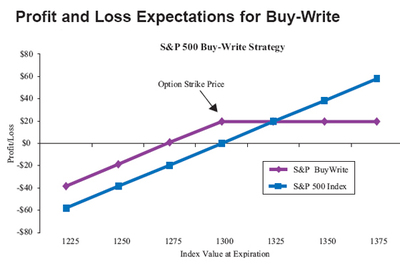
There are many funds today offering some version of covered call strategy (BuyWrite strategy). We have been asked "What do they do?" and "Are they a good addition to a diversified and allocated portfolio?"

In September 2004 the Ibbotson Associates consulting found higher returns and much lower volatility for a the BuyWrite index versus the S&P 500 alone.

1-hypotheticalreturndiag2.jpg

-- qvmgroup

Continue reading "Buy-Write covered calls: BEP and BWV" »

August 12, 2008

FT Alphaville

FinancialTimes' ftalphaville. Instant trends, market moves, as seen from the City outside the USA.

July 27, 2008

Urban Digs:economics of NYC real estate

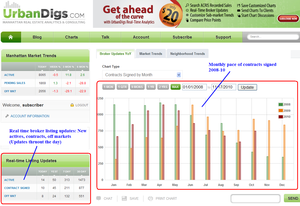
urbandigs tracks real estate in NY -- more aimed at investors than at consumers.

Update 2010 Nov.:

blog compares Midtown East with Midtown West.

See also time series charts: Noah Rosenblatt of UrbanDigs has created a unique realtime tool for tracking Manhattan RE.

Urban-diggs.png

[ via BigPicture. ]

July 25, 2008

SEC vs short sellers

Short sellers are great sources of information and ideas, according to Gary Weiss.

What is the SEC's cost benefit calculation in crusading against short sellers ?

September 28, 2007

Buy at the bid, not the ask

Chuck Norris never buys at the ask, only the bid.

-- comment in DealBreaker

Continue reading "Buy at the bid, not the ask" »

June 18, 2007

Gary Weiss

Gary Weiss' Investment muckracking.
Example: Ticks in naked shorts.

June 1, 2007

Epicurean Dealmaker

epicureandealmaker on fat tails.
Derivatives: Transfering risk or reducing risk ?

May 25, 2007

Naked Shorts / Greg Newton

Credit Derivatives: Where’s the Risk ?

CDO implosion coming, by nakedshorts.

January 15, 2007

All About Alpha

AllAboutAlpha, example:
value premium, value pricing.

return = alpha + beta * (market return)

December 17, 2006

Housing markets at Seeking Alpha

Housing markets at Seeking Alpha.

October 2, 2006

All about Alpha

allaboutalpha, another investment and finance strategy journal
where Alpha Male opines about portabe alpha.

September 28, 2006

Michael Covel

Michael Covel, turtle investor.
Watch out for scams.

July 27, 2006

Ben Stein

Invest in foreign emerging market ETFs.

Debt to foreigners and medicare costs will crush baby boomer
Americans during their retirement age.

-- Ben Stein.

And his criticts: BusMovie, on options backdating.

Continue reading "Ben Stein" »

July 23, 2006

Varying observation window portfolio stress test

Portfolio stress test by varying the observation window, at Seeking Alpha.

The difference in projected portfolio performance as a reflection
of the changing dynamics of foreign markets. As globalization
increases, some other economies are more coupled to the U.S.
economy and—perhaps more important—are perceived as
being more coupled to the U.S. economy. Further, as more
domestic investors put an increasingly heavy allocation into
foreign stocks, we will naturally see more coupling in returns
and there will be a decreased level of diversification effects
available from investing in many foreign economies.

July 22, 2006

Random Rodger / Rodger Nusbaum

Random Rodger Nusbaum investment strategy.

Example: Get some exposure to foreign ETFs.

June 25, 2006

Capital Spectator

Capital Spectator on money, interest rates, and hedging the economy:
Examples: TIPS (inflation-indexed Treasury,10-year TIPS), market
watching fed funds
.

June 24, 2006

Ticker Sense

Tickersense monitors the stock market and trendspots:
first day of the month, GoogleTrends.

Continue reading "Ticker Sense" »

June 23, 2006

Investment Dealers' Digest on analyst earnings

IDD (Investment Dealers' Digest) looks an analyst earnings.

Continue reading "Investment Dealers' Digest on analyst earnings" »

June 19, 2006

Not Making this Up / Jeff Mathews

Jeff Mathews is not Making this up: Example:
criminal defence in the name of Jesus.

Continue reading "Not Making this Up / Jeff Mathews " »

June 5, 2006

Chief Officer: CXO advisory

Chief Officer: CXO advisory.
Management Science digest.

May 19, 2006

Trader Feed, Trader Psychology

Trader Feed opines on trading strategy and psychology.
By author of Psychology of Trading (Wiley, 2003) using
historical patterns in markets, Brett Steenbarger.
EX: feeling momentum.

May 18, 2006

Random Roger investing

Random Roger invests his portfolio,
and explains how, in the WSJ.

May 11, 2006

Footnoted Edgar files

Footnoted reads SEC filings, Edgar's fine print.

May 9, 2006

Graham and Dodd breed optimism

Stephen Roach of Morgan Stanley New York revisits value analysis by Graham and Dodd.
Optimistic ?

Refs: Security Analysis by Benjamin Graham and David Dodd.

May 6, 2006

Ideoblog busmovie / Larry E. Ribstein

Corporate law and governance are topics of Ideoblog Ribstein. Examples:
Gretchen Morgenson on corporate governance, the state's role in changing corporate contracts.

April 30, 2006

Long or short capital: value of naming rights

Value of naming rights: Instead of Goldman Sachs, why not
Goldman Sacks by Smirnoff Ice ? Indeed.

Long or short capital offers mockery for the investing class.

Coruscation would like Goldman Buffett Sachs by Saks Fifth Ave and Broad Street.

April 29, 2006

Bloggingstocks down 34 %

Bloggingstocks (AOL/Calacanis) is more about
numerology than insight.

April 23, 2006

Wall Street Folly

Wall Street Folly: clipping service for the aspiring beta banker.

April 19, 2006

Leveraged Sellout / Amit Chatwani

Leveraged Sellout's entertaining life around Wall Street.

April 16, 2006

The Deal

Corporate merger, acquisitions, and take-overs: The Deal offers a
NY-centric view. See also Deal Breaker and Deal Book.

April 8, 2006

Under the Counter

Under the Counter tracks who's who in investing.

April 7, 2006

Carried Interest

Carried Interest examines PIPE: private investment in public equity.

A PIPE is an alternative available to publicly traded companies that
need to raise money but don't want to go through the complexity
of selling shares through a secondary offering. Instead, the company
finds an investor and sells him a block of newly issued shares at an
agreed price or a block of debt which can later be converted into
shares (a structured PIPE).

April 6, 2006

Going Private

Private equity: Going Private gives catty take downs of
Guy Kawasaki and Maverick Mark Cuban.

Update 2009 January: On Barry 0, vs Chicago School of Economics 1.

Confesses to physics on Dealbreaker.

March 29, 2006

Deal Breaker, Deal Book (NYT)

Investment banking reads: Deal Breaker by Gawking Stalwart
and Dealbook by NYT.

December 10, 2005

Crossing Wall Street / Eddy Elfenbein

Crossingwallstreet stock picking blog.

Abnormal Returns

Abnormal Returns hunts for Alpha.
Example: January Effect

Update: redesign in 2009 is reasonable.

Tadas Viskanta

October 22, 2005

Carnival of the Capitalists at Drakeview

Drakeview hosts Carnival of the Capitalists 104th weekly
business punditry roundup.

October 6, 2005

Consumer Shorts

The Stalwart rounds up the non-retailing shorts and shares the gloom
for the consumer economy.

October 2, 2005

Bankstocks / Tom Brown

Bankstocks' daily and occasional news on banking, and investing
in banks (with Matt Stichnoth).

Good fresh content plagued by broken JavaScript.

September 28, 2005

Bond Talk

Bond Talk and commentary.
Delayed publication by four weeks for non-subscribers.

September 12, 2005

Seeking Alpha

Seeking Alpha neatly ontologized money science into

* Exchange-Traded Funds (ETFs)
* Market Commentary
* China Investing
* Media Investing
* Digital Media Investing
* Stock Market Blogs
* Economics Blogs
* Venture Capital Blogs
* Personal Finance Blogs

and brings me Herb Morgan, Chief Investment Officer of Efficient Market
Advisors, on The Problem With Vanguard ETFs.

September 11, 2005

Roubini Global Economics

Roubini Global Economics Monitor:

Hedge funds: Measuring hedge funds' risk

September 9, 2005

The Stalwart / Joseph Weisenthal

The Stalwart's interesting business coverage, such as:
What's Really Wrong With Dell ?, on the celebrity industry:
The Case For Paparazzi.
Also a real estate analysis.

Update 2009 May: Occasional co-author Vincent Fernando launches Research Reloaded.

Update 2008 October: now at Clusterstock.

Update 2008 August: Fluffy bits at Josephweisenthal.com.

Update: Less frequent after spring of 2006, but came back in April 2007.
Also, 2007 August, was guesting at TechDirt.

Continue reading "The Stalwart / Joseph Weisenthal" »

September 3, 2005

Track home builders stock

Track home builders' stock.

Toll Brothers Inc. (TOL)
KB Home (KBH)
Pulte Homes Inc. (PHM)
DR Horton Inc. (DHI)
KB Home (KBH)
Hovnanian Enterprises Inc. (HOV)

June 12, 2005

Big Picture / Barry Ritholtz

New Yorker, car fan, and economist Barry Ritholtz's Big Picture, a well presented
peresonal economic journal. Sample article, Homeowners Go Deep in Debt to Buy
Real Estate
.

Also writes as Amateur Investor columnist at The Street / Real Money.

Update 2008 Noverber: Now at Ritholtz.com: example.

Continue reading "Big Picture / Barry Ritholtz" »