Main

December 29, 2011

Grade-School reform feedback loop


Today in 'think like an economist' -- incentives matter:

Hypothesis: these new tests are measuring the right things and that teaching to the test is an improvement over teaching one's own possibly-haphazard curriculum.

Data: every teacher casually encountered just has no notion that this Reach For The Top business could even in theory accomplish anything. It's just more hoops to jump through.

Analysis: given that the thing that is being measured seems to be the wrong thing, it seems like the changes are worse than nothing. Pre-reform: teachers try to do the right thing, but who knows whether they do it or not. Post-reform: teachers are now being judged on the wrong thing, so they have to focus on that instead of what they think is the right thing.

Maybe the average teacher is relying on slanted and inaccurate information from their union leaders here. But the people who are actually making the policy are either making no effort to explain the point of the policy, or are unable to communicate with the people "on the front lines".

December 17, 2011

The real Romney ?


How ably Romney the nominee will defend himself, given the kid-gloves treatment by his current competition and the campaign's avoidance of large segments of his own life story, is difficult to say just yet. In early November I watched Romney return to Iowa for only the fourth time. He stopped in Dubuque and Davenport and, before decent-size crowds, essentially regurgitated his address on the economy from the week before. In both cases he spoke for less than 20 minutes and did not take questions from the audience. Far more of his ground time was devoted to filming promotional material in a Dubuque sheet-metal factory, where the footage would capture the candidate seeming engaged in the kind of heart-to-heart dialogues with working-class Americans that the campaign had otherwise left off his schedule that day.

Continue reading "The real Romney ?" »

November 25, 2011

The poor, not seen or heard ?


There is also a growing out-of-sight-out-of-mind problem. A study, by Sean Reardon, a sociologist at Stanford, shows that Americans are increasingly living in areas that are either poor or affluent. The isolation of the prosperous, he said, threatens their support for public schools, parks, mass transit and other investments that benefit broader society.

OPINION
The Poor, the Near Poor and You
null
Published: November 23, 2011
One in three Americans lives in poverty or close to it. If the country does not change direction, more Americans will be struggling.

November 24, 2011

Three types of leadership: humane authority, hegemony and tyranny.


According to the ancient Chinese philosopher Xunzi, there were three types of leadership: humane authority, hegemony and tyranny. Humane authority won the hearts and minds of the people at home and abroad. Tyranny -- based on military force -- inevitably created enemies. Hegemonic powers lay in between: they did not cheat the people at home or cheat allies abroad. But they were frequently indifferent to moral concerns and often used violence against non-allies. The philosophers generally agreed that humane authority would win in any competition with hegemony or tyranny.

In other countries, China must display humane authority in order to compete with the United States, which remains the world's pre-eminent hegemonic power. Military strength underpins hegemony and helps to explain why the United States has so many allies. President Obama has made strategic mistakes in Afghanistan, Iraq and Libya, but his actions also demonstrate that Washington is capable of leading three foreign wars simultaneously. By contrast, China's army has not been involved in any war since 1984, with Vietnam, and very few of its high-ranking officers, let alone its soldiers, have any battlefield experience.

Continue reading "Three types of leadership: humane authority, hegemony and tyranny." »

November 20, 2011

Beats: Dr Dre's fashion accessory for dofus


Beats have redefined the lowly headphone, as well as how much people are willing to pay for a pair of them. A typical pair of Beats sell for about $300 -- nearly 10 times the price of ear buds that come with iPods. And, despite these lean economic times, they are selling surprisingly fast.

Whether Beats are worth the money is open to debate. Reviews are mixed, but many people love them. The headphones are sleekly Apple-esque, which is no surprise, since they were created by a former designer at Apple. Beats also offer a celebrity vibe and a lot of boom-a-chick-a-boom bass.

So much bass, in fact, that some audio experts say that Beats distort the sound of the music.

"In terms of sound performance, they are among the worst you can buy," says Tyll Hertsens, editor in chief of InnerFidelity.com, a site for audiophiles. "They are absolutely, extraordinarily bad."

Time was, manufacturers marketed high-priced audio equipment by emphasizing technical merits like frequency response, optimum impedance, ambient noise attenuation and so on. The audience was mostly a small cadre of audiophiles tuned to the finer points of sound quality.

But, three years ago, Beats by Dr. Dre set out to change all that by appealing to more primal desires: good looks, celebrity and bone-rattling bass. Annual sales are approaching $500 million, and Beats have transformed headphones into a fashion accessory.

Continue reading "Beats: Dr Dre's fashion accessory for dofus" »

July 29, 2011

Mike Mayo's Exile on Wall Street


"Look, if you can't compete in the major leagues for over a decade, it's time to go back to the minors," said the always outspoken Mike Mayo, an analyst with CLSA. His chronicle of ruffling bank management feathers, "Exile on Wall Street" (Wiley), will be published in the fall.

JPMorgan Chase is as well managed as any gargantuan bank can be. But if you look at its businesses, it's hard to see any area where it is clearly the best, something even its own executives concede. Not in credit cards, where the premier name is American Express. Not in money management, where you might offer up T. Rowe Price. Investment banking -- Goldman Sachs (the last quarter notwithstanding). Back-office transactions, State Street.

Yet even JPMorgan is merely trading at book value. Put another way, the market regards the value that JPMorgan provides as a financial services conglomerate as zilch. How well do all of JPMorgan's divisions work together? In presentations to investors, JPMorgan executives show how much revenue they gain from existing clients. But these measures are hardly unbiased. Executives have an incentive to defend their empires. Who is to say that a certain division of JPMorgan wouldn't have won that business anyway? And nobody measures how much a bank loses through conflicts of interest.

Making a nuanced argument, John Hempton, a blogger, investor and former regulator in Australia, says that it's better for shareholders -- and societies -- to have large banks with lots of market power. That makes them more profitable and leads them to take less risk, making them safer and more enticing for investors.

July 6, 2011

Gingrich lead


Once again America faced a crossroads, though the word itself wasn't used. "There is virtually no middle ground," Gingrich wrote. He later concluded: "To renew or to decay. At no time in the history of our great nation has the choice been clearer." To avert disaster, Gingrich had no choice but to present many numbered lists. In addition to the Six Challenges Facing America -- similar to the challenges we faced 11 years before -- and the "five basic principles that I believe form the heart of our civilization," there were the five forces moving us toward worldwide medicine, a seven-step program to reduce drug use, the nine steps we can take immediately to advance the three revolutions in health care and more. The futurism was still there, too: "Honeymoons in space will be the vogue by 2020."

Meanwhile, his polemics had hardened. "For some psychological reason, liberals are antigun but not anti-violent criminal," was a typically dubious example. As a former professor (an unpublished one, at West Georgia College), Gingrich wrote about university leftism with all the bitterness of an ex-academic: "Most successful [alumni] get an annual letter saying, in effect, 'Please give us money so we can hire someone who despises your occupation and will teach your children to have contempt for you.' What is amazing is the overwhelming meekness of the alumni in accepting this hijacking of their alma mater."

This is sharp and funny and nearly true, but it's not a formulation designed to coax the undecided into agreement. "To Renew America" marks the moment that persuasion faded as a primary purpose of political talk and preaching to the choir took over. Having won at last, and confident that the future was safely in his pocket, Gingrich by 1995 no longer saw a reason to persuade anyone and didn't try. It's the victor's prerogative, but it doesn't give you practice in constructing arguments. And it's catching. Hence talk radio, and in a few years the blogs; hence Fox News and MSNBC.

Liberals may not have liked this new aggressive tone from conservatives, but they had it coming. At least since the Red Scare of the 1950s, mainstream institutions had viewed ideological conservatism with condescension or contempt, as either a joke or a personality disorder -- a series of "irritable mental gestures which seek to resemble ideas," in Lionel Trilling's excellent summary. Gingrich's rhetoric had the ferocity of a backlash. The liberal revulsion toward him obscured how unorthodox -- occasionally, how liberal -- his conservatism was. The books then and now are full of heresy. He showed a willingness to criticize other Republicans, even Reagan at the height of his popularity. He advocated a health tax on alcohol to discourage drinking -- social engineering, it's called -- and imagined government-issued credit cards that would allow citizens to order goods and services directly from the feds. He thought the government should run nutritional programs at grocery stores and give away some foodstuffs free. He was pushing cuts in the defense budget in 1984 and a prototype of President Obama's cash-for-clunkers program in 1995.

Continue reading "Gingrich lead " »

June 11, 2011

For-profit colleges that leave students with crushing debt.


though the for-profit system serves only a little more than a tenth of those in postsecondary education, it accounts for nearly half of student loan defaults. The losses are generally of little concern to the companies themselves, because most of the tuition is paid by federal loans backed by the taxpayer. The defaulting students often end up with their lives in financial ruin.

Bankruptcy makes it possible to escape credit card and gambling debt but nearly impossible to escape student loan debt. As a result, students who default on school loans may never be able to have that weight lifted and can end up with creditors garnishing their wages.

The Obama administration has tried to address these problems with new rules to make programs with especially high levels of student debt and very low repayment rates ineligible for federal student aid. But these rules are insufficient.

Continue reading "For-profit colleges that leave students with crushing debt." »

May 18, 2011

Middle class ? Nothing special about $250k


In the debate over how to close the budget deficit, President Obama talks often about raising taxes on "millionaires and billionaires," but his policy prescription is a bit different. He says that federal income taxes should be increased on families making more than $250,000. That seems to be the threshold. Under $250,000, you're middle class; over it and you're wealthy.

On a Yahoo message board, a poster named Mason, who lives in Manhattan with two young children, said his household income was $262,000. "I understand the need to raise taxes," he wrote, "but I don't understand why people like us are lumped in with millionaires and billionaires."

On one level, Mason is feeling the effects of inflation; $250,000 isn't what it used to be. If Mr. Obama were really trying to return to Mr. Clinton's 1993 levels, he would have to adjust the bracket for inflation, moving it up to about $386,075. In fact, in Mr. Clinton's last year in office, the top bracket had risen to $288,350 from $250,000.

Continue reading "Middle class ? Nothing special about $250k" »

April 20, 2011

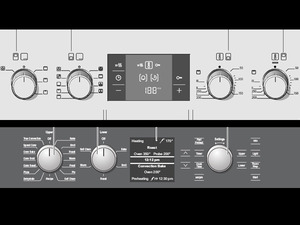
Americans like workds; Europeans, symbols


"The use of symbols rather than words, for example, is a cheap if irritating solution to the problem of selling appliances in a linguistically diverse market."

06_Bosch-oven.jpg

We're No. 1!
But only when it comes to domestic appliances. (Slate)
By Mark Vanhoenacker
Posted Wednesday, April 6, 2011, at 8:15 AM ET

April 1, 2011

Middle class begins at $68k


A single worker with two young children needs an annual income of $57,756, or just over $27 an hour, to attain economic stability, and a family with two working parents and two young children needs to earn $67,920 a year, or about $16 an hour per worker.

-- a study by a women's advocacy group that looked at what a somewhat secure middle-class lifestyle costs.

Continue reading "Middle class begins at $68k" »

March 19, 2011

Wealthy is more than $7.5 million, middle class is under $1.75 million


Above $1.75 million, the middle class starts turning wealthy.


According to a Fidelity Investments survey of more than 1,000 millionaires (households with at least $1 million in investible assets, excluding retirement accounts and real estate), 42% of respondents say they don't feel wealthy. Keep in mind that while $1 million is the threshold, this group has an average net worth of $3.5 million.

That 42% is slightly better than the 46% who said they didn't feel wealthy in 2009. So the recovery has, at least, made some miserable millionaires a little less miserable.

Those who don't feel wealthy were asked how much money they would need to feel wealthy. Their answer: $7.5 million. (That's the median asset level).

But here's the interesting twist. The 58% of millionaires who did feel wealthy were also asked how much money they had when the began to feel "wealthy." Their answer: $1.75 million.

So millionaires who don't feel wealthy say they would need $7.5 million to feel wealthy, while those who do feel wealthy need only $1.75 million.

-- Robert Frank

March 9, 2011

Property tax levied by the village on a typical Bronxville home is now $43,000 annually. Upper middle class ?


The property tax levied by the village on a typical Bronxville home is now $43,000, up 34 percent in the last five years, although the increase was negligible in the last two years as the mayor, the village trustees and school board members responded to their middle class constituents' concerns.

"I don't think we have seen an antitax uprising, but holding down property taxes is certainly spoken about a lot," said Dr. James D. Hudson, the 54-year-old school board president, a dentist with two children in the high school. He is often buttonholed on the subject, he said, at cocktail and dinner parties or while shopping.

"Their concern is that their taxes will continue to spiral up if we continue to do business as usual," said Dr. Hudson. "If you will, we are looking to develop a lean, mean education machine."

Lean and mean were rarely invoked in the past as a goal for America's wealthiest suburbs -- nearby Scarsdale, for example, Shaker Heights on the outskirts of Cleveland, Brookfield and River Hills near Milwaukee, and Greenwood Village in Colorado. Now that talk is commonplace, and it showed up in interviews with officials and in these communities, where property taxes have often risen by 4 or 5 percent a year.

Continue reading "Property tax levied by the village on a typical Bronxville home is now $43,000 annually. Upper middle class ?" »

February 21, 2011

Man up ?


Young men are tuning in to cable channels like Comedy Central, the Cartoon Network and Spike, whose shows reflected the adolescent male preferences of its targeted male audiences. They watched movies with overgrown boy actors like Steve Carell, Luke and Owen Wilson, Jim Carrey, Adam Sandler, Will Farrell and Seth Rogen, cheering their awesome car crashes, fart jokes, breast and crotch shots, beer pong competitions and other frat-boy pranks. Americans had always struck foreigners as youthful, even childlike, in their energy and optimism.

Pre-adulthood can be compared to adolescence, an idea invented in the mid-20th century as American teenagers were herded away from the fields and the workplace and into that new institution, the high school. For a long time, the poor and recent immigrants were not part of adolescent life; they went straight to work, since their families couldn't afford the lost labor and income. But the country had grown rich enough to carve out space and time to create a more highly educated citizenry and work force. Teenagers quickly became a marketing and cultural phenomenon. They also earned their own psychological profile. One of the most influential of the psychologists of adolescence was Erik Erikson, who described the stage as a "moratorium," a limbo between childhood and adulthood characterized by role confusion, emotional turmoil and identity conflict.

Continue reading "Man up ?" »

February 17, 2011

FCIC


The conventional wisdom has it that the final report of the Financial Crisis Inquiry Commission was a low-budget flop, hopelessly riven by internal political disputes and dissension among the commission's 10 members. As usual, the conventional wisdom is completely wrong. Actually, the report -- and the online archive of testimony, interviews and documents that are now available -- is a treasure trove of invaluable information about the causes and consequences of the Great Recession.

-- William Cohen

February 2, 2011

Smart and well educated, extremely adept technologically


The reporters had begun preliminary work on the Afghanistan field reports, using a large Excel spreadsheet to organize the material, then plugging in search terms and combing the documents for newsworthy content. They had run into a puzzling incongruity: Assange said the data included dispatches from the beginning of 2004 through the end of 2009, but the material on the spreadsheet ended abruptly in April 2009. A considerable amount of material was missing. Assange, slipping naturally into the role of office geek, explained that they had hit the limits of Excel. Open a second spreadsheet, he instructed. They did, and the rest of the data materialized -- a total of 92,000 reports from the battlefields of Afghanistan.

The reporters came to think of Assange as smart and well educated, extremely adept technologically but arrogant, thin-skinned, conspiratorial and oddly credulous. At lunch one day in The Guardian's cafeteria, Assange recounted with an air of great conviction a story about the archive in Germany that contains the files of the former Communist secret police, the Stasi. This office, Assange asserted, was thoroughly infiltrated by former Stasi agents who were quietly destroying the documents they were entrusted with protecting. The Der Spiegel reporter in the group, John Goetz, who has reported extensively on the Stasi, listened in amazement. That's utter nonsense, he said. Some former Stasi personnel were hired as security guards in the office, but the records were well protected.

Continue reading "Smart and well educated, extremely adept technologically" »

January 19, 2011

Nexus: speedy border pass ?


The Editor:

Am I the only person who complains about the southbound border wait times for NEXUS holders? I cross the border several times a week. Seldom is the wait more than a few minutes returning to B.C. when using the NEXUS lane. Typically, when I drive up to the booth after swiping my card the Canadian agent looks at me, looks at the screen and says go ahead or have a nice day and actually smiles.

Going south is a crapshoot. If you happen to be traveling south at the wrong time, you may end up waiting up to 30 minutes in the NEXUS lane. On a long weekend, don't be surprised to be waiting up to 90 minutes!

Why do NEXUS holders have to put up with such long waits going south compared to going north? NEXUS card holders have had a background check, been fingerprinted, photographed, interviewed and issued what apparently is supposed to be a secure ID card that can't be forged yet some U.S. border guards continue to ask 20 questions instead of relying on random checks with zero tolerance. Where are you going? Purpose of your trip? Why are you going there? How often do you come down? Are you meeting anyone there? Are they Canadian or U.S.? Are they friends? When are you returning? Anything to declare? (Good question, the only one that should be asked.)

Some U.S. border guards seem to grasp the trusted traveler concept and when they man the booth, things move along reasonably. Unfortunately, there is no consistency among them which leads me to the conclusion that there is a lack of proper training specifically related to the Nexus lane.

This has been an ongoing problem since the NEXUS program was introduced. I am sure that U.S. business owners would be happy to see more business in these difficult economic times.

Unless the border guards change their ways, you are going to see less business as people get fed up with the ridiculous waits and cancel their golf memberships, move their yachts to Canadian waters and return to shopping in Canada.

Name withheld by request
White Rock

December 25, 2010

AMT ( alternative minimum tax ) haunts middle class


the alternative minimum tax started out as a way to ensure that the wealthiest Americans paid their fair share of taxes. But as many families know all too well, it now ensnares people much closer to the middle class, and it hits more upper-middle income taxpayers than those at the very top, according to a recent study by the Urban Institute. No wonder it's often referred to as the "stealth tax."

There may not be much you can do to avoid the A.M.T., especially if you have children and live in a high-income state like New York or California (the A.M.T. rules disallow deductions for dependents and state income taxes as well as several others).

December 22, 2010, 3:57 PM
Minimizing A.M.T. Through Charitable Donations
By TARA SIEGEL BERNARD

December 12, 2010

Middle class under $250k, Democrat messaging gone wrong


Yes, Democrats are fools to tear their hair out over this deal, which gives them most of what they wanted: the middle-class tax rates, unemployment benefit extension, payroll-tax cut, and so on. They compound the idiocy by advertising higher taxes on the rich as their core objective. Forget relieving poverty, widening access to health care, improving opportunities for the disadvantaged. What matters more than any of that is sticking it to "millionaires and billionaires" (two-earner households making more than $250,000). You bet, the Democrats are acting like fools.


-- Clive Crook

December 3, 2010

(upper) middle class: assets of $2 million to $15 million, a bracket Ms. Napp described as "the lower end of the high end".


Michelle Pont moved out in the spring of 2009 and filed for divorce. The estranged couple has since spent several hundred thousand dollars on lawyers, accountants and investigators. The judge overseeing the case has warned that the total could exceed $1 million if the two sides cannot reach a compromise.

Ms. Pont said the money from Balance Point would allow her to sustain the case for as long as necessary. Balance Point does not charge interest; instead, clients pay the company a percentage of their winnings.

Lawyers who finance other civil cases generally keep at least a third of the winnings. Ms. Napp said Balance Point required a "substantially smaller" share from clients, though she declined to be more specific.

The company wants to focus on people with marital assets between $2 million and $15 million, a bracket Ms. Napp described as "the lower end of the high end." She said that investing in smaller disputes was not worthwhile. Wealthier people, she said, seemed to resolve divorces more easily -- perhaps because they still felt wealthy in the aftermath. "Anything south of $15 million, when you divide that in half and take out the legal fees, you're not in the same house, you're not taking the same trips -- your life is different," she said. "You can't maintain that same quality of life that you're used to."

Continue reading "(upper) middle class: assets of $2 million to $15 million, a bracket Ms. Napp described as "the lower end of the high end"." »

December 2, 2010

tax breaks for income over $250,000 for a family to expire ? Middle class could suffer


House Democrats said they could press ahead as early as Thursday with a vote to allow the tax breaks for income over $250,000 for a family to expire even though such a plan appears unlikely to be able to clear a Senate filibuster, given solid Republican opposition and resistance from several Democrats. Democrats said they could use the votes to make their position for middle class tax cuts clear and also illustrate that they do not have the votes to block extension of the lowered tax rates for the wealthy, clearing the way for concessions.

Continue reading "tax breaks for income over $250,000 for a family to expire ? Middle class could suffer" »

November 24, 2010

Schumer for the middle class ?


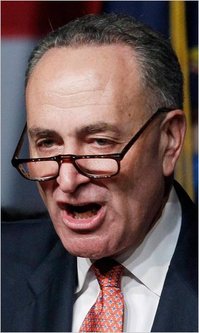
Officially, Senator Charles E. Schumer of New York will be both vice chairman of the Democratic caucus and chairman of the Democratic Policy Committee. In those roles, he will also share control over the party's messaging apparatus run out of the Senate Democratic Communications Center, better known as the war room.

schumer-ny.jpg
Mr. Schumer has been outspoken in his belief that Democrats need to concentrate their energies on initiatives aimed at the middle class, a view that the rank and file applaud.

Continue reading "Schumer for the middle class ?" »

October 24, 2010

Triathletes extend life from 20s to 40s, and consume


"Triathlons are much better for the body than long-distance running. With triathlons, when you are injured running, you can still swim and bike."

-- Dr. Michael J. Neely, the medical director at NY Sports Medicine and Physical Therapy, based in Manhattan.

... And leads to branded consumerism:

all the accessories and lifestyle brands that now cater to him and other triathletes. They can now buy TriSwim's shampoo to remove chlorine, and sports drinks like Hammer Nutrition Heed, which is sold on Web sites like One Tri. There are aerodynamic helmets and sunglasses made for triathlons, as well as wet suits and tri-specific running sneakers made by K-Swiss, Asics, Zoots and Newton.

At Placid Planet, a bicycle and triathlon shop in Lake Placid, N.Y., the new must-have accessories are Zipp wheels and compression tights. "Zipp wheels are an aerodynamic carbon wheel that increase speed by reducing drag on the wheel," said Kenny Boettger, the owner. Compression tights and socks, he said, help athletes recirculate oxygen and blood. "This is the big thing right now and it works," he said.

There are also magazines like Lava, which began publishing in August and offers testosterone-fueled articles and profiles that appeal to men who dream about being Ironmen. With page after page of Lycra, equipment reviews and training tips, the magazine is geared for "hardcore triathletes who want to get right inside the fiery molten center of triathlon," according to its mission statement.

Lava's macho-man mantra is simple. "Forty is the new 20," said John Duke, who publishes the monthly magazine in San Diego. "And in triathletes, 40 isn't old. The median age of the sport is 41."

Good thing, too, since triathlons don't come cheap. "Forty-somethings are also the ones who can afford the sport," said Scott Berlinger, the head coach of Full Throttle, a 120-man triathlon team that is based out of the Chelsea Piers in Manhattan. "I tell my athletes everything costs $100 -- shoes, helmets, glasses -- and the big purchase is your bike."

A bicycle -- the tri-world equivalent of the red sports car -- can cost anywhere from several hundred dollars to more than $10,000. After the bike and the chiropractor bills, the biggest item is individual coaching, which can easily run $100 an hour.

"Triathletes are a discerning group of alpha consumers, with $175,000 average salaries," said Erik Vervloet, vice president for sports marketing at K-Swiss, which jumped into the tri-market three years ago. "The average Ironman spends $22,000 a year on the sport."

The high price is an issue, particularly for spouses. "I still argue with the wife about the costs," said Mr. Goodman, the triathlete from Stamford. His gear includes a $5,000 Cervelo bicycle, a $3,000 Pinarello bicycle, Xterra Vector Pro2 wet suits, Izumi Tri Fly 111 bike shoes and a Lazer Tardiz helmet.

But his wife, Amy, eventually came around. "At first it was a bit hard for me to swallow," said Ms. Goodman, 32, who is attending graduate school in the field of public health, "but when I saw that the bike wasn't going to hang on the wall, I thought, in terms of self-indulgences, this is one of the best things he could be doing."

Continue reading "Triathletes extend life from 20s to 40s, and consume" »

September 13, 2010

Useful, practical, durable city-cars: obsolete ?


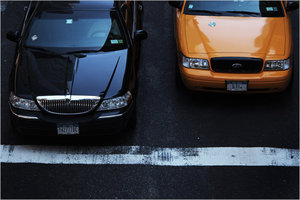
The durable Ford Crown Victoria and Lincoln Towncar with easy entry back seat are being retired.
Will they be replaced by smaller cars with smaller, painful to access back seats, or with full size SUVs, or with specialty makes like a Checker Marathon Cab or London Taxi ?


TOWNCAR2-nyc.jpg

"These cars are a facet of people's everyday experience," said David Yassky, the city's taxi commissioner. "Whatever takes their place will have a real and tangible influence on the city's aesthetic."

Passengers should prepare for a bumpier, more cramped ride. Forget roomy trunks that fit a French-door refrigerator; the older models are yielding to smaller gas-and-electric hybrid vehicles with knee-bumping back seats and flimsier frames.

The impending departures have left New York's livery world scrambling. The Taxi and Limousine Commission is holding a contest to design a new taxicab to replace the city's 8,200 Crown Victoria yellow taxis. The Police Department will lose a fast-accelerating sedan it has depended on since 1992. And the black-car industry must replace 75 percent of its fleet.

What's next: Audi A8L, Tahoe Denali XL, or Altima ?

Continue reading "Useful, practical, durable city-cars: obsolete ?" »

July 26, 2010

Geithner, Obama: top begins at $250k (Coruscation Middle Class series continues)


In appearances on several Sunday talk shows, Geithner said only 2 to 3 percent of Americans -- those making $250,000 or more a year -- will be affected when tax cuts enacted under former President George W. Bush end on schedule this year.


The Obama administration has said it wants to keep tax cuts in place for Americans earning less than $250,000 a year. Some Republicans say letting any of the tax cuts expire is effectively a tax hike that may hurt recovery.

"Just letting those tax cuts that only go to 2 percent to 3 percent of Americans, the highest-earning Americans in the country, expire I do not believe it will have a negative effect on growth," he said on ABC.

No New Recession, Let Tax Cuts Die: Geithner
By REUTERS
Published: July 25, 2010

July 13, 2010

Perpetual trusts: The Rising Power of the American Dead


Tax breaks are not the only special advantages that American dynasty trusts provide. Even more troubling, they commonly include a "spendthrift clause," which provides that trust assets cannot be reached by a beneficiary's creditors. If a beneficiary causes a car accident, for example, the victim cannot be compensated with assets from the trust, even if they are the driver's only resources. So beneficiaries are free to behave as recklessly as they like, knowing that their money is forever protected for themselves and their heirs.

Surprisingly, dynasty trusts can also be bad for the beneficiaries themselves. Many wealthy people agree with Andrew Carnegie and Warren Buffett that it is not in their children's best interest for them to be given so much wealth that they don't need to work. Dynasty trusts rob future parents of the ability to decide this for their children, because the ancestor creating the trust is the one who determines how much wealth each generation of his descendants will receive.

What can be done to eliminate these trusts? A state-level solution is unlikely, since all 50 states would need to act in unison. But Congress could fix the problem by limiting the generation-skipping-transfer exemption to trusts that last no longer than two generations. After that, beneficiaries of a trust should be subject to tax, like everyone else. Then America would not have to face the uncontrollable growth of a new aristocracy.

Ray D. Madoff, a professor at Boston College Law School, is the author of "Immortality and the Law: The Rising Power of the American Dead."

Continue reading "Perpetual trusts: The Rising Power of the American Dead" »

July 11, 2010

Why American healthcare costs are high


A member of the Chukchansi tribe in California, Andrews is 6-foot-4 and about 250 pounds, with tattoos of his spirit animals ringing his thick biceps. He doesn't joust because he's attracted to romantic notions of honor and chivalry or because he has an affinity for the medieval period. ("I don't know jack about history, nor do I care," he says.) He does it because he considers jousting one of the most extreme sports ever invented, and he likes doing things that most other people can't or won't do.

"I like violent sports," says Andrews, who also participates in mixed martial arts. "I like hitting you. I like getting hit. I like competing man to man to see who the better man is that day."

The problem is that Andrews and Adams joust in a style they call "full contact," which, while popular in North America, is considered by the rest of the world to be unnecessarily dangerous. It's a reputation that isn't helped by the video on YouTube showing the two men describing their many injuries, including the time a lance bruised Andrews's heart and he nearly died from a pulmonary embolism. (He was back jousting five days after his release from the hospital.)

...

Over time, modern jousters have learned the lessons of their medieval predecessors -- plate armor protects better than chain mail, and more armor protects better than less. Even so, there are still plenty of injuries: concussions and dislocated shoulders, broken hands, assorted fractures and gashes. In one much-talked-about incident a few years ago, the Australian jouster Rod Walker suffered a partly severed penis when a lance veered south during a match at a Renaissance fair in Michigan -- a targeting failure that might not have happened if both he and his opponent hadn't been competing with broken hands.

It is these incidents that keep European jousters from coming to the U.S. to compete, and has those who have swearing they won't return. European jousters typically use lances with balsa-wood tips, which produce fewer dangerous splinters and deliver a less powerful hit. "Come do our sport and break your bones -- that's not the ideal recruitment poster," says Petter Ellingsen, a Norwegian jouster who has competed in nine countries and been injured badly only twice -- both times when competing in what he calls "the American style." "I don't think it's cool completing a tournament with four broken bones in my hand," he says. "I think it's bad for the sport."

Continue reading "Why American healthcare costs are high" »

June 15, 2010

Man's life


Just capering cuties in grainy black-and-white making the clichéd "you've caught me in my nightie!" face. The stories are bombastic but empty, always exposing something or other - sin, vice, sinful vice. Typical tales: "The Harlots of Des Moines!" or "Girls For Sale in Sex-Drenched Dusseldorf!" And there's always a Nazi story. In every issue, Nazis. Why? Because a large part of the target American demographic had spent its youth whipping Nazi butt, I suppose. And another part of the demographic really got off on Nazis, one fears.

ad12.jpg

In the back, the ads - "Bedtime story" books, novelty records shipped in plain wrappers, lots of truss ads (more so in the fifties than the 60s - by the JFK era, men were no longer rupturing their innards at the same rate) and innumerable tiny ads aimed at self-improvement. Because if there's one theme that runs throughout these mags, it's the need for the readership to improve itself. The readership knew it. If the readership didn't need self improvement, they wouldn't be reading these things.


-- James Lileks

Continue reading "Man's life" »

April 9, 2010

Brooks: 60 percent of American adults made more than $100,000 in at least one or two of those years


This produces a lot of dynamism. As Stephen J. Rose points out in his book "Rebound: Why America Will Emerge Stronger From the Financial Crisis," the number of Americans earning between $35,000 and $70,000 declined by 12 percent between 1980 and 2008. But that's largely because the number earning over $105,000 increased by 14 percent. Over the past 10 years, 60 percent of American adults made more than $100,000 in at least one or two of those years, and 40 percent had incomes that high for at least three.

David Brooks defines a slice of the middle class.

Continue reading "Brooks: 60 percent of American adults made more than $100,000 in at least one or two of those years" »

November 8, 2009

Sesame at 40

The pedagogy hasn't changed, but the look and tone of "Sesame Street" has evolved. Forty years on, this is your mother's "Sesame Street," only better dressed and gentrified: Sesame Street by way of Park Slope. The opening is no longer a realistic rendition of an urban skyline but an animated, candy-colored chalk drawing of a preschool Arcadia, with flowers and butterflies and stars. The famous set, brownstones and garbage bins, has lost the messy graffiti and gritty smudges of city life over the years. Now there are green spaces, tofu and yoga.

Continue reading "Sesame at 40" »

October 17, 2009

Whitopian migration results from tempting pulls as much as alarming pushes

When those pop-up lists beckon you from your Web browser ("Retire in Style: Fifteen Hotspots!"), or those snappy guidebooks flirt with you from the bookstore shelves (America's 25 Best Places to Live!), ever notice how white they are?
Whitopian migration results from tempting pulls as much as alarming pushes. The places luring so many white Americans are revealing. The five towns posting the largest white growth rates between 2000 and 2004 -- St. George, Utah; Coeur d'Alene, Idaho; Bend, Oregon; Prescott, Arizona; and Greeley, Colorado -- were already overwhelmingly white. Certainly whiter than the places that new arrivals left behind and whiter than the country in general. We know why white folks are pushed from big cites and their inner-ring suburbs. The Whitopian pull includes economic opportunity, more house for your dollar, a yearning for the countryside, and a nostalgic charm.

Most whites are not drawn to a place explicitly because it teems with other white people. Rather, the place's very whiteness implies other perceived qualities. Americans associate a homogeneous white neighborhood with higher property values, friendliness, orderliness, cleanliness, safety, and comfort. These seemingly race-neutral qualities are subconsciously inseparable from race and class in many whites' minds. Race is often used as a proxy for those neighborhood traits. And, if a neighborhood is known to have those traits, many whites presume -- without giving it a thought -- that the neighborhood will be majority white.

Searching for Whitopia: An Improbable Journey to the Heart of White America (Hardcover)
by Rich Benjamin (Author)

October 5, 2009

Lunch in the Washington Village

Washington is small enough -- and single-mindedly obsessed enough with its interlacing business of governing, lawyering, lobbying and journalism -- for power to concentrate in just a few places, rather than dispersing across the length and breadth of, say, a New York or London. Our company-townies -- the mighty and the not-so-mighty -- are herders.

See the Secret Service guys at Old Ebbitt Grill (convenient to the White House); the administration's youngsters at Oya; low-level Hill staffers at Tortilla Coast; the older society crowd at Cafe Milano (Dick Cheney and his SUV entourage stopped by for a private-room meal and a bottle of the good stuff earlier this month); and so on. Few places in town, though, seem to have been embraced with such distilled dedication as by the lobbyists nesting at Tosca.

Continue reading "Lunch in the Washington Village" »

October 4, 2009

Low-income housing in New Orleans stokes long-simmering tensions

James Perry, executive director of the housing center and a candidate for mayor of New Orleans, said class animosity might be at the root of much of this anger, though discrimination against the poor is not a violation of the Fair Housing Act. It is illegal to discriminate against minorities, however, and given that a disproportionate number of those who need affordable housing in the area are black, he said, these arguments almost inevitably involve race.

Continue reading "Low-income housing in New Orleans stokes long-simmering tensions" »

September 4, 2009

Democrat plan to stop private health insurance companies from providing benefits ?

After years of complaining about private health insurers denying care, the democrat plan
is now to penalize insurers who do provide full coverage.

Mr. Baucus's plan, expected to cost $850 billion to $900 billion over 10 years, would tax insurance companies on their most expensive health care policies. The hope is that employers would buy cheaper, less generous coverage for employees, thereby reducing the overuse of medical services.

The separate new fee on insurance companies would help raise money to pay for the plan. The fee would raise $6 billion a year starting in 2010, and it would be allocated among insurance companies according to their market shares.

The fees were first proposed by Senators Charles E. Schumer of New York, John D. Rockefeller IV of West Virginia and Debbie Stabenow of Michigan. Until now, Mr. Baucus had not shown interest in the idea.

Mr. Schumer said, "The health insurance industry should pay its fair share of the cost because it stands to gain over 40 million new consumers under health care reform legislation."

Mr. Rockefeller said the fees were justified because insurance companies were "rapaciously, greedily and unstoppably making money by underpaying the patient, by underpaying the provider and by overpaying themselves."

Continue reading "Democrat plan to stop private health insurance companies from providing benefits ?" »

August 31, 2009

VW for idiots, Part 2

The Jetta platform will provide the basis for VW's new workhorse for the American market, and the company is "pretty much convinced" that Jetta will be the name as well, Mr. Jacoby said. But he promised a retooling that would try to blend European design and allure with Americans' practical needs.

For instance, there will be more and different types of cup holders -- a must-have for American consumers.

A different suspension will yield a smoother ride. Folding mirrors, a necessity in tight European streets, will not be standard. The acceleration and braking pedals will be farther apart in response to American complaints that it is easy to accidentally press both simultaneously.

And some other device will replace the balky dials used to recline seats in European cars. Market research in the United States found that "women break their fingernails or scratch their hands," Mr. Jacoby said.

Volkswagen is also slowly asserting firm control over its dealer network, long a source of irritation among American buyers. They complained about bad after-sales service on top of quality problems, such as electrical systems, with VW cars.

Part 1: VW tailored especially for unrefined Americans.

Continue reading "VW for idiots, Part 2" »

August 24, 2009

Tailored especially for unrefined Americans.

2011 Volkswagen Jetta - Tailored especially for unrefined Americans.

From C&D:

"Why is VW walking away from global cars, especially at a time when other automakers are globalizing? The company feels that American and Asian customers don't appreciate the refinement of its current offerings. "U.S. customers look at car size and engine displacement. They won't pay a dollar extra for a Passat over the Camry just because of its finesse and attention to detail," a company executive told us in Wolfsburg."

I hope that VW realizes that many of us by a VW JUST because they are refined - and are willing to pay a little more. Build your car for the masses - just please keep sending the Passat, Golf, etc., for those of us who appreciate the difference.

Continue reading "Tailored especially for unrefined Americans." »

August 21, 2009

Middle class end, affluent begins around $10 million

Any major shift in the financial status of the rich could have big implications. A drop in their income and wealth would complicate life for elite universities, museums and other institutions that received lavish donations in recent decades. Governments -- federal and state -- could struggle, too, because they rely heavily on the taxes paid by the affluent.

Perhaps the broadest question is what a hit to the wealthy would mean for the middle class and the poor. The best-known data on the rich comes from an analysis of Internal Revenue Service returns by Thomas Piketty and Emmanuel Saez, two economists. Their work shows that in the late 1970s, the cutoff to qualify for the highest-earning one ten-thousandth of households was roughly $2 million, in inflation-adjusted, pretax terms. By 2007, it had jumped to $11.5 million.

The gains for the merely affluent were also big, if not quite huge. The cutoff to be in the top 1 percent doubled since the late 1970s, to roughly $400,000.

July 15, 2009

Mddle class earning up to $280,000 ( $350,000 couples)

The middle class escape new healthcare taxes on individuals earning $280,000 and up and couples earning more than $350,000.

-- Representative Charles B. Rangel of New York, Chairman of the tax-writing Ways and Means Committee.

But emerging from daylong committee negotiations Friday, Mr. Rangel said the income surtax would take effect in 2011 and begin at 1 percent of adjusted gross income -- earnings before deductions like those for mortgage interest and charitable contributions -- and would apply to individuals earning more than $280,000 and couples earning more than $350,000.

The surtax would be increased for individuals earning more than $400,000 and couples earning more than $500,000, and step up again for individuals earning over $800,000 and couples earning above $1 million. The precise extent of these increases has not been announced.

Mr. Rangel's committee is also planning to insert language that would raise the surtax in 2013 if expected cost savings in the health care system do not materialize.

Continue reading "Mddle class earning up to $280,000 ( $350,000 couples)" »

July 7, 2009

Between $250,000 and $500,000 is middle income, mortgage-wise

David Adamo, the chief executive of Luxury Mortgage in Stamford, Conn. likened the current mortgage market to a barbell, with pockets of availability for borrowers at both ends of the income spectrum but less for those in between. Those with annual incomes up to about $250,000 have access to mortgages insured by the Federal Housing Administration, while the very affluent can obtain loans from private banking institutions.

For middle class borrowers with household incomes between $250,000 and $500,000, however, mortgages are not as easy to get, Mr. Adamo said. "These people are living in places where starter homes might be $1 million," he said, "and it's really affecting them."

Fannie Mae and Freddie Mac will accept only loans below $729,500 in the highest-cost markets like New York City and northern New Jersey. For mortgages larger than that, mortgage brokers and bankers must find other investors who want to take the loans. (Mortgage brokers process the applications on a lender's behalf, while mortgage bankers will finance the loan and sell it shortly thereafter.)

Continue reading "Between $250,000 and $500,000 is middle income, mortgage-wise" »

June 3, 2009

Health Care: Coverage vs Cost

During the campaign, Obama talked about the need to control medical costs and mentioned a few ideas for doing so, but he rarely lingered on the topic. He spent more time talking about expanding health-insurance coverage, which would raise the government's bill. After the election, however, when time came to name a budget director, Obama sent a different message. He appointed Peter Orszag, who over the last two years has become one of the country's leading experts on the looming budget mess that is health care.

Their argument happens to be supported by a rich body of economic literature that didn't even make it into the book. More-educated people are healthier, live longer and, of course, make more money. Countries that educate more of their citizens tend to grow faster than similar countries that do not. The same is true of states and regions within this country. Crucially, the income gains tend to come after the education gains. What distinguishes thriving Boston from the other struggling cities of New England? Part of the answer is the relative share of children who graduate from college. The two most affluent immigrant groups in modern America -- Asian-Americans and Jews -- are also the most educated. In recent decades, as the educational attainment of men has stagnated, so have their wages. The median male worker is roughly as educated as he was 30 years ago and makes roughly the same in hourly pay. The median female worker is far more educated than she was 30 years ago and makes 30 percent more than she did then.

Continue reading "Health Care: Coverage vs Cost" »

May 30, 2009

Unamerican names part 3

Deferring to people's own pronunciation of their names should obviously be our first inclination, but there ought to be limits. Putting the emphasis on the final syllable of Sotomayor is unnatural in English (which is why the president stopped doing it after the first time at his press conference), unlike my correspondent's simple preference for a monophthong over a diphthong, and insisting on an unnatural pronunciation is something we shouldn't be giving in to.

Mark Krikorian, Center for Immigration Studies blogs on the Corner

April 3, 2009

Justine Lai with the presidents

Justine Lai celebrates with the 44 American presidents, one at a time.

I am interested in humanizing and demythologizing the Presidents by addressing their public legacies and private lives. The presidency itself is a seemingly immortal and impenetrable institution; by inserting myself in its timeline, I attempt to locate something intimate and mortal. I use this intimacy to subvert authority, but it demands that I make myself vulnerable along with the Presidents.

And playfully !

March 30, 2009

Most educated towns (degrees) Top 25

As usual, Boston and Washington DC are well represented in the most educated towns list. [CNN]

Rank City % residents with graduate degrees

1 Arlington, VA 35.7%
6 Towson, MD 31.2%
8 Bethesda, MD 29.1%
9 Alexandria, VA 29.0%

3 Brookline, MA 32.5%
15 Newton, MA 26.9%
16 Cambridge, MA 26.3%

Continue reading "Most educated towns (degrees) Top 25" »

February 28, 2009

North Face eats its dogfood

A nice example of a company using its own product:

Even companies not receiving federal money are trimming back. The North Face, the outdoor apparel and equipment company, hosted dealers and business partners at a Squaw Valley resort near Lake Tahoe in California late last year.

But to save the cost of 400 hotel rooms for the first night, North Face created a base camp where the group slept outdoors in North Face clothes and sleeping bags. Groups gave presentations around a camp fire. "The night was freezing cold," said Katja Asaro, managing director at Henry V Events, the Portland company that had planned it. "But people really got into it."


Continue reading "North Face eats its dogfood" »

January 16, 2009

So sorry

So sorry ?

Are you as sorry as you were four years ago ?

December 21, 2008

Today's rich don't exploit the poor they just outcompete them.


Looking at upper-middle-class homes, Lareau describes a parenting style that many of us ridicule but do not renounce. This involves enrolling kids in large numbers of adult-supervised activities and driving them from place to place. Parents are deeply involved in all aspects of their children's lives. They make concerted efforts to provide learning experiences.

Home life involves a lot of talk and verbal jousting. Parents tend to reason with their children, not give them orders. They present "choices" and then subtly influence the decisions their kids make. Kids feel free to pass judgment on adults, express themselves and even tell their siblings they hate them when they're angry.

The pace is exhausting. Fights about homework can be titanic. But children raised in this way know how to navigate the world of organized institutions. They know how to talk casually with adults, how to use words to shape how people view them, how to perform before audiences and look people in the eye to make a good first impression.

Working-class child-rearing is different, Lareau writes. In these homes, there tends to be a much starker boundary between the adult world and the children's world. Parents think that the cares of adulthood will come soon enough and that children should be left alone to organize their own playtime. When a girl asks her mother to help her build a dollhouse out of boxes, the mother says no, "casually and without guilt," because playtime is deemed to be inconsequential -- a child's sphere, not an adult's.

Lareau says working-class children seem more relaxed and vibrant, and have more intimate contact with their extended families. "Whining, which was pervasive in middle-class homes, was rare in working-class and poor ones," she writes.

But these children were not as well prepared for the world of organizations and adulthood. There was much less talk in the working-class homes. Parents were more likely to issue brusque orders, not give explanations. Children, like their parents, were easily intimidated by and pushed around by verbally dexterous teachers and doctors. Middle-class kids felt entitled to individual treatment when entering the wider world, but working-class kids felt constrained and tongue-tied.


David Brooks

Continue reading "Today's rich don't exploit the poor they just outcompete them." »

December 20, 2008

Middle class at $150k, according to middle class earners

For example, four-in-ten Americans with incomes below $20,000 say they are middle class, as do a third of those with incomes above $150,000. And about the same percentages of blacks (50%), Hispanics (54%) and whites (53%) self-identify as middle class, even though members of minority groups who say they are middle class have far less income and wealth than do whites who say they are middle class.

pew_middleclass_793-2gif

Some 53% of adults in America say they are middle class. On key measures of well-being -- income, wealth, health, optimism about the future -- they tend to fall between those who identify with classes above and below them. But within this self-defined middle class, there are notable economic and demographic differences. For example, four-in-ten Americans with incomes below $20,000 say they are middle class, as do a third of those with incomes above $150,000. And about the same percentages of blacks (50%), Hispanics (54%) and whites (53%) self-identify as middle class, even though members of minority groups who say they are middle class have far less income and wealth than do whites who say they are middle class.

Pew, Inside the Middle Class: Bad Times Hit the Good Life (2009 April)

Reason

November 12, 2008

Bush in 1978: before playing country cowboy

"Kent Hance was a down-home boy, real homey, and George W. wasn't homey like Kent," recalled Johnnye Davis, a Republican leader in Odessa. "He didn't come across to the voters as well as Kent did, with the little jokes that Kent told."

While Mr. Bush now is sometimes mocked for an ignorance of policy details, back then people thought he had the opposite problem: a tendency to drop references in his speeches that baffled audiences, like a discussion of anti-inflationary economic policy.

"He was quick, a bit too quick, so that people didn't always get it," Mrs. Davis said. "He was so darn intelligent that a lot of what he said went over people's heads. He's learned to explain things a little better since then."

Another problem was that while Mr. Bush never really had a clear campaign strategy, Mr. Hance did: he focused his campaign on emphasizing local ties and on casting Mr. Bush as a carpet-bagger from the East. One of Mr. Hance's most effective radio spots was this one, read by an announcer:

"In 1961, when Kent Hance graduated from Dimmitt High School in the 19th congressional district, his opponent George W. Bush was attending Andover Academy in Massachusetts. In 1965, when Kent Hance graduated from Texas Tech, his opponent was at Yale University. And while Kent Hance graduated from University of Texas Law School, his opponent" -- the announcer's voice plunged -- "get this, folks, was attending Harvard. We don't need someone from the Northeast telling us what our problems are."

Continue reading "Bush in 1978: before playing country cowboy" »

October 31, 2008

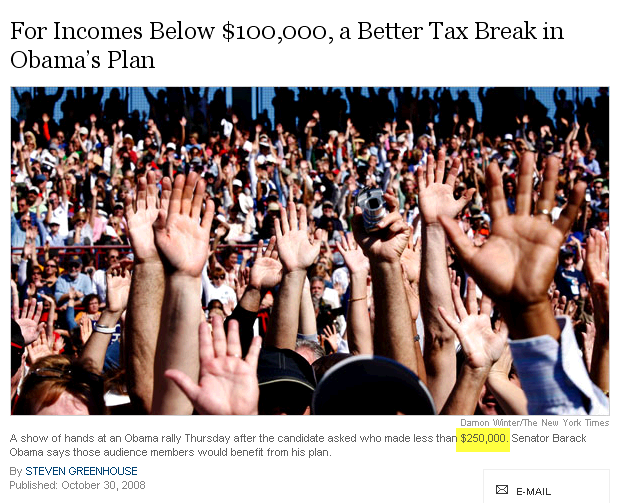
Under $250,000 is middle class: Obama

A show of hands at an Obama rally Thursday after the candidate asked who made less than $250,000. Senator Barack Obama says those middle class audience members would benefit from his plan.

obama_250k_tax.png


Mr. Obama opposes extending President Bush's tax cuts. Instead, he proposes various tax breaks, including a $500 tax credit for each person in a household who works, a larger child care tax credit, a $4,000 tax credit each year for the first two years of college, and eliminating all income taxes for those over 65 with income less than $50,000 a year.

To reduce the deficit and inequality, he would raise the tax rate for single households with incomes of $200,000 or more and for families with incomes over $250,000. He would also raise taxes on capital gains and dividends.

For married couples with incomes of $500,000 with two children and both parents working, the Tax Policy Center found that Mr. Obama would raise income taxes by $3,363, from $110,955 now, while Mr. McCain's plans would leave taxes unchanged. Deloitte found that a $500,000-a-year couple would pay $3,100 more under Mr. Obama, with no change under Mr. McCain.

Mr. McCain also proposes giving many households a $5,000 tax credit when they buy family health insurance, which costs $12,000 nationwide on average.

Previously: Charles Gibson of ABC: $200,000 a year was a middle-class income.

Continue reading "Under $250,000 is middle class: Obama" »

October 20, 2008

Middle class: only up to $250, 000 annual income ?

The definition of middle class is in flux. Many try to quantify and specify it in income terms.

Here's Charles Gibson of ABC (Via Paul Krugman): suggested that $200,000 a year was a middle-class income.

October 19, 2008

John Cleese on Sarah Palin

Funnier than Michael Palin.

July 24, 2008

Frugalness as an American value ?

Megan vs Brooks on frugalness as an American value; an economic history of debt in America.

Popup video: Megan McArdle on debt in America

[Economist video]

July 22, 2008

McMansions no more (Leigh County, PA)

Bethlehem Township developer Abraham Atiyeh announced two weeks ago that he's building a downtown Bethlehem development of town homes starting at $129,000, and national builder Pulte Homes has halted its large-home building in the area and last winter began marketing a new home, called "The Lehigh", with 1,050 square feet and starting price of $139,000.

McMansions No More ** Fewer behemoth homes may be built in the Lehigh Valley as turmoil in the housing market opens the door for smaller, more affordable living
Morning Call - Allentown, Pa.
Author: Matt Assad
Date: May 25, 2008
Start Page: A.1
Section: National
Text Word Count: 2299

[Via McAll]

July 5, 2008

Aspen idea merchants

Aspen Idea Festival gathers the idea merchants: journalists, entrepreneurs,
and academics who talk about ideas more than about people, and about
people more than about things.

February 22, 2007

WMTC

We moved to Canada, by former Americans.

January 27, 2007

Crunchy Con

Crunch-Con humble conservatives ? Example: Pelos movie on evangelical culture.

"Culture war" is the right's version of the left's "class war."

Continue reading "Crunchy Con" »

September 21, 2006

Separated by a Common Language

Separatedbyacommonlanguage compare US English to British English.

June 25, 2005

Deep Throat unknown to Big Mouth

Essay:The Secret That Didn't Reach Washington's Lips
By Sally Quinn

No. I did not know who Deep Throat was. And no. I never asked
my husband, Ben Bradlee. Why not? For several reasons. I have too much
pride, to begin with. I knew perfectly well Ben wouldn't tell me and I
didn't want to be refused. Secondly, I . . . how shall I say this? ...
have a big mouth. It would have been a huge responsibility to know.
It was also clear that if somebody else spilled the beans, fingers
would be pointed at me.

Continue reading "Deep Throat unknown to Big Mouth" »

May 5, 2005

Man Date

Dinner with a friend has not always been so fraught. Before women
were considered men's equals, some gender historians say, men routinely
confided in and sought advice from one another in ways they did not
do with women, even their wives. Then, these scholars say, two
things changed during the last century: an increased public awareness
of homosexuality created a stigma around male intimacy, and at the
same time women began encroaching on traditionally male spheres,
causing men to become more defensive about notions of masculinity.

-- 8.

And so, man date joins the lexicon.

Continue reading "Man Date" »

December 16, 2004

Sage advice from avuncular Donald Rumsfeld

Sage advice from the avuncular Donald Rumsfeld:

"Intellectual capital is the least fungible kind."

"Most people spend their time on the 'urgent'
rather than on the 'important.' "

"When you initiate new activities, find things you
are currently doing that you can discontinue--whether
reports, activities, etc. It works, but you must force
yourself to do it. Always keep in mind your
'teeth-to-tail ratio'."

See also Jack Welsh's five questions for leaders.

December 14, 2004

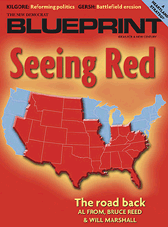
US Canada maps

More USA-Canada maps from the post-election era.

.
from Canada is an ally in the War on Terror.


from BluePrint magazine.

November 13, 2004

Autoblog

Autoblog's Mini Cooper.

November 4, 2004

Canadian Ally

Canada is an ally in the War on Terror.

October 23, 2004

100 good American speeches

100 good American speeches, mp3 samples.